
- When Is the Best Time to Pre-Germinate Grass Seed?
-
How to Pre-Germinate Grass Seed: A Step-by-Step Guide
- How to Select the Right Grass Seed for Pre-Germination
- What Materials Do You Need for Soaking?
- How to Soak Grass Seed for Germination
- How Often Should You Change the Water and Rinse Seeds?
- How Long Should Grass Seed Soak?
- How to Drain and Prepare Sprouted Seeds for Planting
- How to Mix Sprouted Seed with a Carrier for Spreading
- How to Plant Pre-Germinated Grass Seed Without Damaging Sprouts
- What Continued Care Do Pre-Germinated Seedlings Need?
- What Are Common Mistakes When Pre-Germinating Grass Seed?
- What Is Pre-Germinating Grass Seed?
- What Are the Benefits of Pre-Germinating Grass Seed?
- Similar posts:
When Is the Best Time to Pre-Germinate Grass Seed?
Late summer to early fall is the best time to pre-germinate cool-season grass seed. Soil temperatures should be warm then – ideally in the low to mid-70s °F – which helps seeds sprout. Cooler air also supports the young seedlings as they grow.
Pre-chitting seed works especially well when you have a short window for establishment. Think sports field managers, or anyone seeding in early autumn. This method gives the seeds a head start, letting them take root before cold weather sets in.
How to Pre-Germinate Grass Seed: A Step-by-Step Guide

Pre-germinating grass seed means soaking and sprouting seeds indoors before you plant them. This speeds up germination. It usually takes 3 to 7 days, depending on the type of grass seed and how warm the water is.
To do it, put seeds in a container that lets water through. Submerge them in room-temperature water. Then, regularly drain and rinse the seeds with fresh, clean water. Once they sprout, mix the seeds with a dry material. This makes them easier to spread. After planting, new grass needs constant care to grow well.
How to Select the Right Grass Seed for Pre-Germination
Pre-germination helps many turfgrass species, particularly cool-season grasses. Kentucky Bluegrass (KBG) sees big gains here; it germinates slowly, often needing five days of soaking. Tall Fescue and Perennial Ryegrass also do well.
You’ll want to experiment to find the best soaking times for each grass type.
What Materials Do You Need for Soaking?
Soaking grass seed requires a permeable container. Think mesh bags, cheesecloth, or even paint strainer bags. These let water reach every seed and drain easily. You’ll also need a bucket or similar container to hold the water and the seed bag.
Keep the water at room temperature – 65 to 75 degrees Fahrenheit is ideal. This stops mold and helps the seeds sprout. A colander makes draining and rinsing the seeds much simpler.
How to Soak Grass Seed for Germination
Soaking grass seed helps it sprout faster. First, measure your seed and put it into a mesh bag or cheesecloth. Then, drop the bag into a bucket of clean, room-temperature water. The seeds need to stay fully underwater for about 24 hours. This lets them soak up water, softening their outer shell and kickstarting germination. Keep the bucket somewhere dark; most seeds prefer that for sprouting.
How Often Should You Change the Water and Rinse Seeds?
After soaking for 24 hours, change the water. Rinse the seeds every 12 hours, or once a day. Take out the seed bag, pour out the old water, and rinse the seeds with fresh, clean water. This gives them oxygen, stopping mold and rot.
How Long Should Grass Seed Soak?
Most turfgrass seeds need a 3 to 5-day soak. Stop the process when tiny root tips show – that means they’re ready for planting. Soak them too long, and the seeds will rot.
How to Drain and Prepare Sprouted Seeds for Planting
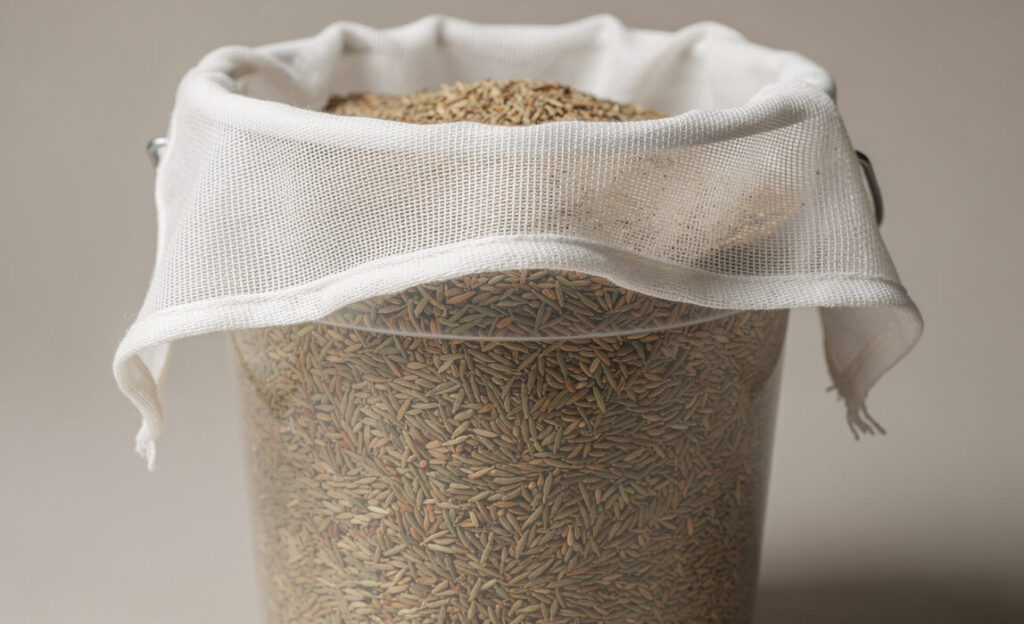
When tiny root tips show, take the seed bag out of the water. Let all the extra water drain away – don’t wring the bag. That keeps the delicate sprouts safe. Once drained, let the seeds dry a bit.
Next, mix these pre-germinated seeds with a dry substrate. You could use compost, sand, peat moss, or a granular starter fertilizer. This mix stops clumping and helps spread the seeds evenly when you plant them. Remember to stir the seed ball each time you water it during pre-germination; this ensures even moisture and prevents too much heat from building up.
How to Mix Sprouted Seed with a Carrier for Spreading
Mix sprouted seeds with a dry carrier. Try mushroom compost, sand, peat moss, or Milorganite. This keeps seeds from clumping and helps spread them evenly. Use a 1:4 ratio – one pound of seed to four pounds of carrier. Screening the mix removes extra carrier, making sure the seeds spread well.
How to Plant Pre-Germinated Grass Seed Without Damaging Sprouts
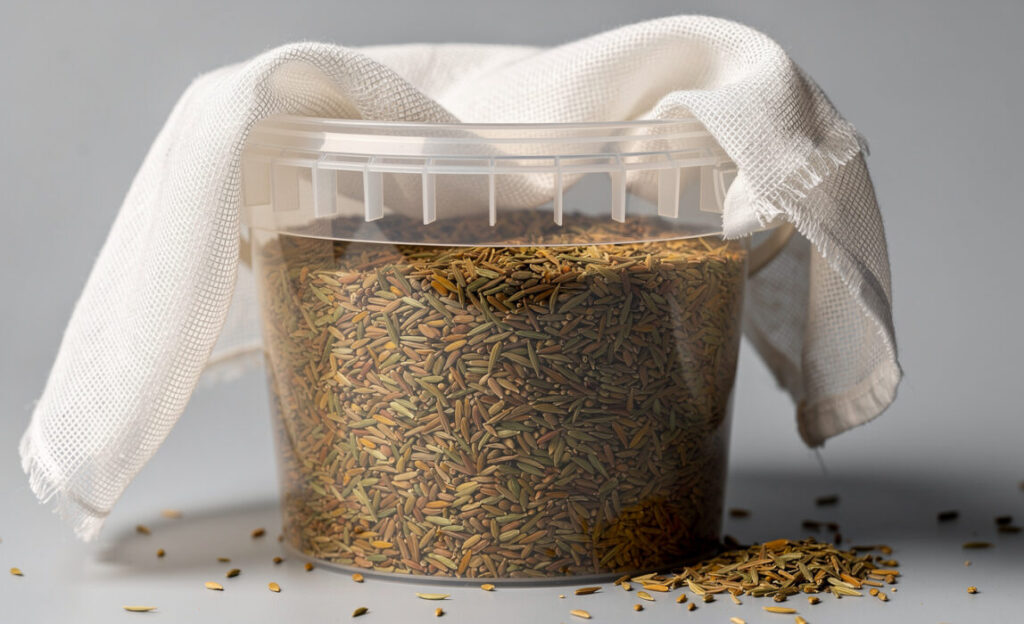
Mix the seeds with a carrier, then spread them the same day. This keeps roots from growing too long or drying out. Broadcast spreading is fine, but hand spreading works best if seeds clump together. Rake the seeds lightly into the soil. This ensures good contact.
What Spreading Methods Work Best for Sprouted Seed?
Broadcasting is a popular way to spread sprouted seeds. People often mix them with a dry carrier, then use a rotary or drop spreader. But mechanical spreaders can be tricky. Pre-germinated seeds are wet and might clump, even with wide-open settings.
Many find hand spreading works better, especially if seeds stick together. Try grabbing small clumps and flinging them hard, parallel to the ground – that helps them spread out. Other tools can also improve seed-to-soil contact. Consider a disc or dimple seeder, or even a sorrel roll.
How to Ensure Good Seed-to-Soil Contact
Pre-germinated seeds need good contact with the soil to sprout. First, prepare the ground by dethatching and aerating it. Once you spread the seeds, lightly rake them into the topsoil. You could also add a thin layer of sand dressing. Covering the area with germination sheets, fleece, or debris netting helps keep moisture in and protects the seeds.
Can You Use Starter Fertilizer with Pre-Germinated Seed?
Yes, you can use a starter fertilizer with pre-germinated seed. This is usually safe, even good for new seedlings. Starter fertilizers give plants key nutrients. Nitrogen helps with chlorophyll, and phosphorus builds strong roots. Milorganite has almost no salt, so it won’t burn young plants. Some starter fertilizers also include mesotrione, which is fine to use when seeding.
What Continued Care Do Pre-Germinated Seedlings Need?
Once you plant pre-germinated seeds, careful attention is key for them to take root. You’ll need to keep the soil moist, often watering several times a day – much like with regular seeding. Keep up this watering for at least a month, or until the new grass blades look strong. Watch out for frost; young roots and shoots can easily get hurt.
A germination sheet or fleece can help hold in moisture and warmth.
If you’re overseeding an older lawn, try a growth regulator on the existing grass. This gives new seedlings an edge, letting them get more sun and time to sprout.
What Are Common Mistakes When Pre-Germinating Grass Seed?
Soaking seeds too long makes them rot. If you don’t change the water often, mold will grow. Overfilling permeable bags stops you from stirring the seeds properly, so they won’t sprout evenly. And waiting too long to plant after sprouts show up – even a day or two – can damage those fragile new roots.
Many people also expect pre-germination to fix everything. It won’t replace good soil prep, fertilizer, or cultivation. Uneven moisture or cooling can also lead to patchy sprouting.
How to Prevent Mold and Rot During Soaking
A light hydrogen peroxide rinse can also help. Don’t leave seeds underwater for long after the first 24 hours. They could drown and rot.
What Happens if Seeds Soak Too Long?
Seeds can spoil if they sit in water too long without air or fresh water. You’ll notice an off-smell. This makes them useless. Plant seeds as soon as you see tiny root tips, not after the roots have grown a lot in the container.
How to Avoid Seed Clumping During Spreading
After their last soak, drain pre-germinated seeds completely. This stops them from clumping together. Mix the seeds with a dry carrier – peat moss, sand, or a granular starter fertilizer works well. This drying agent helps separate the wet seeds, making them much easier to spread. Make sure mesh bags have plenty of room for the seeds to expand and move around while soaking. This prevents them from getting tangled and clumping inside the bag.
What to Do if Roots Sprout Too Long Before Planting?
Seeds get very fragile if their roots sprout too long before planting. It’s hard to spread them without damage. Plant them when you see only tiny root tips, not when the roots are long.
Long roots make mechanical spreading nearly impossible. Hand spreading might work, but it’s still tough. The seed will die if not planted before the young roots grow too much – they dry out fast once exposed to air.
What Is Pre-Germinating Grass Seed?
Pre-germinating grass seed means soaking and sprouting seeds in a container. You control the water, oxygen, and temperature there. This method kick-starts the natural germination process. It’s different from standard planting, giving turfgrass a “jump-start.” This cuts down the time it takes for seeds to grow once they hit the lawn. Seed priming is not the same; that involves hydrating seeds then drying them, with no visible sprouts.
What Are the Benefits of Pre-Germinating Grass Seed?
Pre-germinating grass seed helps it sprout and take root faster. This method cuts down the time until you see new grass, speeding up the whole growing process. It also saves water; keeping a small batch of seeds wet in a bucket uses less water than constantly soaking a whole lawn.
Homeowners save time and lose less seed this way. Birds, squirrels, and other pests eat fewer seeds. Rain or sprinklers wash away less of it too. Pre-germination also boosts success when overseeding, patching bare spots, or thickening a lawn. New seedlings get a head start against older grass. This shortens how long unsprouted seeds face environmental threats, making it perfect for reseeding or fixing dead patches.