
Common Weeds That Look Like Grass
Many weeds look just like turfgrass. This makes them hard to spot and even harder to get rid of. These grass-like weeds fight turf for water and food. They can quickly take over a lawn if no one manages them.
Think of crabgrass, annual bluegrass, and nutsedge. Other common ones are goosegrass, Johnsongrass, foxtail, and quackgrass. Dallisgrass and creeping bentgrass also fall into this group. The list goes on – common couch, carpetgrass, smooth bromegrass, and yellow salsify. Slender rush, bamboo, yellow nutsedge, and false brome also fit. Horsetail, pampas grass, cheatgrass, jubatagrass, reed canarygrass, and yellow flag iris are more examples. People call them “grass-like” weeds or “Grassy Weeds” because they grow much like grass, even if their flowers look different.
Crabgrass

Crabgrass is a simple annual weed. It thrives in warm weather and makes thick patches on the ground. Its leaves are light green, a bit rough, and spread out from one central spot. This weed grows in clumps, or it might spread low and wide over the soil. Sometimes people get it confused with Bermuda grass. You can stop it from growing with pre-emergent herbicides. Once it’s up, treatments with a herbicide work best when the temperature stays under 85 degrees.
Annual Bluegrass

Poa annua, or annual bluegrass, often turns up in lawns. It can live for one season or many. This weed likes damp, cool, shady areas. Its leaves are fine and light green, shaped like a boat, and look paler than Kentucky bluegrass. To fix a problem after the weed sprouts in cool-season lawns, people use Velocity PM herbicide.
Nutsedge

Nutsedge, sometimes called nutgrass, is a perennial weed. It spreads quickly through underground tubers and airborne seeds. This weed loves wet spots with bad drainage. You can spot it by its triangular stems and shiny, lime green leaves.
Getting rid of nutsedge is tough; pulling it often leaves pieces behind that just grow back. It’s a common weed in Texas, frequently mistaken for Kentucky grass. For removal, many turn to selective herbicides like SedgeHammer® or Certainty.
Goosegrass
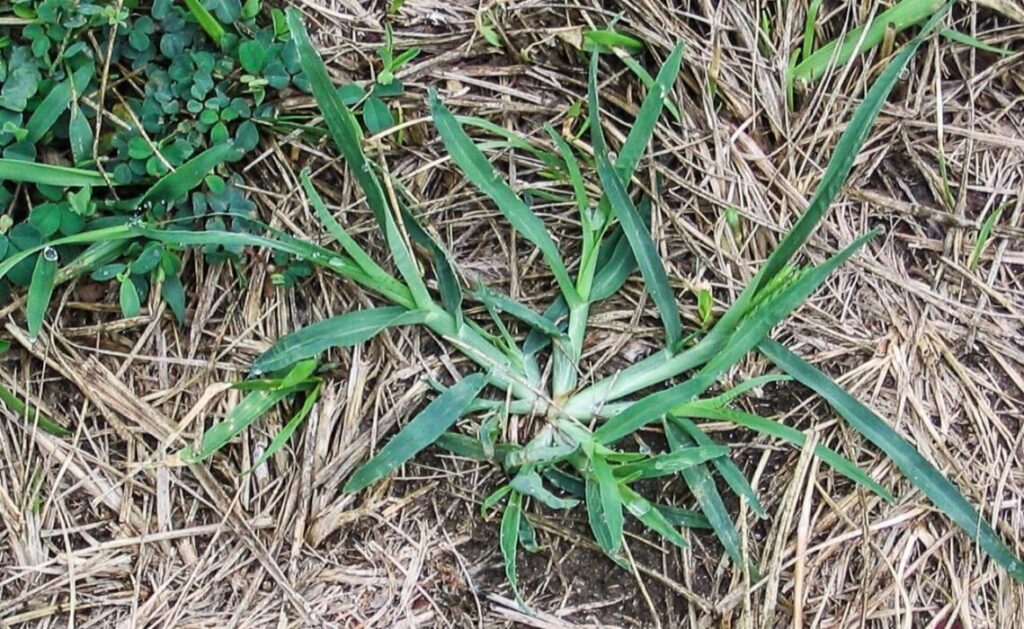
Goosegrass, an annual weed, quickly takes over lawns by spreading seeds. It prefers tight soil and sunny spots. The weed has wide, flat, light green leaves. A clear midrib marks them, and their texture is rough.
Goosegrass forms dense, low clumps, growing 6 to 12 inches high. Its seed heads look like clusters of fingers. Even after close mowing, it can still produce seeds. Some types of goosegrass now resist herbicides.
Johnsongrass
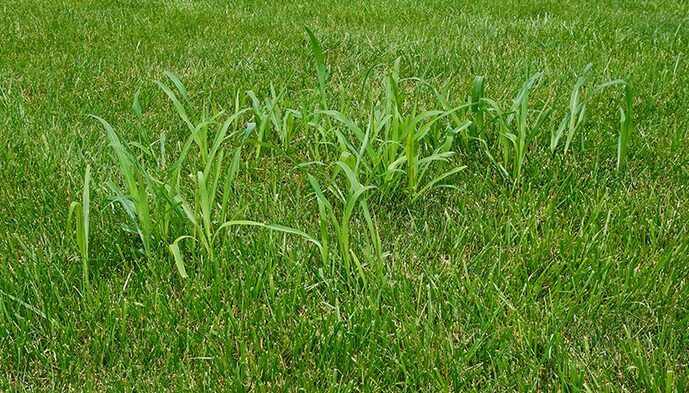
Johnsongrass, an invasive perennial weed, comes from the Mediterranean. It grows 24-72 inches tall. Look for its broad, lance-shaped leaves with a clear midrib. This grass-like weed has tall seed heads full of grain-like seeds. It spreads fast, both by seeds and tricky creeping rhizomes. So, getting rid of it proves hard. Many people mistake it for Tall fescue. For cool-season lawns, you can spot-treat with non-selective herbicides like glyphosate. But be careful – it can harm nearby turfgrass.
Foxtail
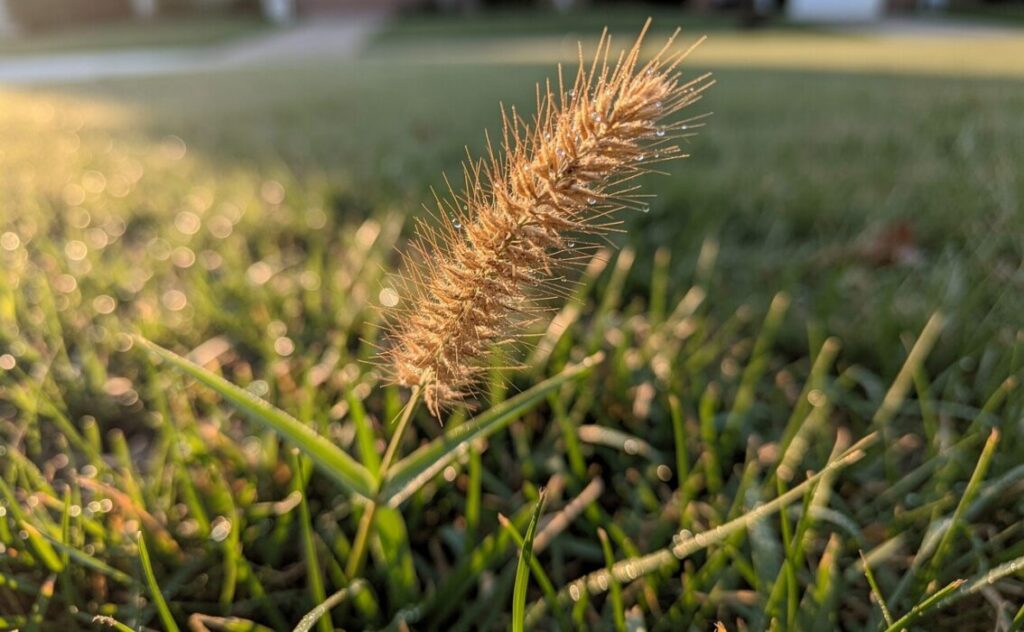
Foxtail, including its green and yellow types, is an annual grass weed. It shoots up fast, fighting with good turfgrass. Foxtail has light green, narrow, cylindrical leaf blades. Its bristled seed heads look like a fox’s tail.
These seed heads begin green, then shift to yellowish-green as they get older. Foxtail hates cool, dry weather because its roots are weak. Low sunlight also slows its growth. People sometimes confuse it with Fine fescue. Since it’s an annual, you can pull it out or just let it die. After that, make your lawn healthier. This stops it from coming back.
Quackgrass

Quackgrass – or common couch – is an invasive perennial weed. Its strong, rhizomatous roots help it spread quickly. You’ll often find it in thin, unhealthy lawns. To control it in cool-season areas, you must carefully pull out all the rhizomes by hand.
Dallisgrass

Dallisgrass is a perennial weed – it grows like grass – that came from South America. It forms thick, round clumps in lawns. This weed has a coarse texture and spreads quickly, often making lawn care difficult. Its wide, grayish-green blades are taller than regular turfgrass. Look for its tall seed heads with small black spots, which grow along the stems from late spring until fall.
Creeping Bentgrass
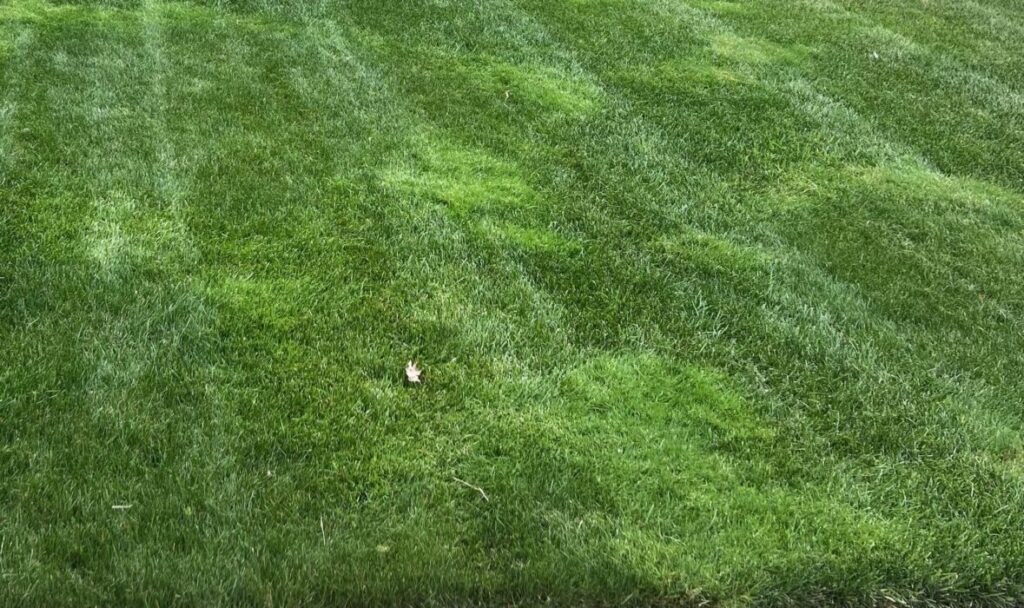
Creeping bentgrass (Agrostis stolonifera) is a tough perennial grass, spreading by stolons. It creates a dense, low-growing turf. Golf courses often plant it for its fine texture, but most homeowners see it as a weed. This grass has narrow, vibrant green leaves. Tenacity herbicide will control it in cool-season lawns. This selective spray – applied after the weed pops up – leaves desirable turfgrass unharmed.
How to Identify Grass-Like Weeds in Your Lawn
Spotting weeds that look like grass means you can control them better and tell them apart from the good lawn grass. Look at a few key things.
First, check the plant’s structure. That includes the crown, sheath, collar, blade, vernation, ligule, and auricle. These parts offer specific clues for identification.
Notice the blade shape and how the leaves feel. Annual bluegrass (Poa annua), for instance, has a tip shaped like a boat. Nutsedge often looks glossy and waxy, its color a brighter lime green. Your lawn grass usually has an even color and blade shape.
How does the plant grow? Weeds often form clumps, or they spread low and wide across the dirt. Most turfgrasses, though, spread evenly using stolons or rhizomes. A messy patch growing outward usually signals a weed. Weeds also tend to grow faster than turf grass.
For sedges, like nutsedge, feel the stem. Its triangular shape is a dead giveaway. Also, look at the roots. Some weeds have shallow root systems, but others – yellow salsify, for example – have deep taproots. Some spread with rhizomes or tubers. Finally, if the plant isn’t mowed, watch for flowers. These can show differences from true grasses.
Why Are Grass-Like Weeds Hard to Control?
Grass-like weeds are tough to manage. They look and grow much like the turfgrass we want to keep. This similarity makes it hard to use herbicides selectively; many will damage the lawn right along with the weeds.
Nutsedge, quackgrass, and goosegrass, for example, quickly return from tubers, rhizomes, or deep roots. Some, especially goosegrass, also develop herbicide resistance. Their fast spread – through seeds or underground parts – helps them stick around.
Effective Control and Prevention Strategies
Controlling and preventing grass-like weeds takes a mix of strategies. If weeds are already growing, hand-pulling works well for small patches or plants with shallow roots. Post-emergent herbicides hit established weeds directly. Selective types – like Certainty herbicide – kill certain weeds while leaving the lawn alone.
For prevention, pre-emergent herbicides lay down a barrier to stop weed seeds from even sprouting. Integrated Pest Management (IPM) brings together scouting, physical removal, and careful herbicide use. Knowing a weed’s life cycle – annual, perennial, or biennial – helps time these efforts. Annual weeds, for example, need different handling than tough perennial ones.
How Proper Lawn Care Prevents Weeds
A thick, healthy lawn is your best defense against grass-like weeds. Your grass will simply outcompete them for water, food, and sunlight. Effective prevention hinges on smart mowing, watering, fertilizing, aerating, and overseeding strategies.
Mow your lawn at the right height for its specific grass type. This stops weeds from going to seed and helps your turf grow strong, which fills in bare spots. Water deeply and rarely – not every day – to encourage strong roots. Weak lawns, often from too much or too little water, just invite weeds.
Use fertilizer based on a soil test; this gives your lawn the nutrients it needs to thrive and fight off invaders.
Aeration helps soil drain better and eases compaction. This makes it tough for weeds like goosegrass to take hold.
Spread good turfgrass seed over thin or bare patches to thicken your lawn. Weeds won’t find a spot to grow. Better soil health overall – including good drainage and proper acidity – also makes the area less welcoming for weeds like carpetgrass and nutsedge.