
What Is the Importance of Watering Your Lawn After Fertilizing?
You need to water your lawn after fertilizing. Why? First, it stops “fertilizer burn.” This happens when chemicals stay on the grass blades too long, scorching them brown. Watering washes the fertilizer off the grass and into the soil. Here, the nutrients can reach the roots and be absorbed.
This step also activates the fertilizer – whether it’s pellets or liquid. Your lawn then gets the food it needs for strong growth and that deep green color everyone wants. If you skip the watering, the fertilizer just sits there, doing nothing. That means wasted product and no real benefits for your lawn.
When to Water Your Lawn After Fertilizing?

Watering after fertilizing prevents damage; it needs to happen within 24 hours. Your plants get nutrients much better this way. This quick watering starts the product working and stops “fertilizer burn.” Granular fertilizers often need immediate watering. With liquid fertilizers, a short wait lets the leaves soak it up. Knowing your fertilizing method helps you plan the right watering time.
When to Water After Granular Fertilizer Application?
A 15-30 minute watering cycle is enough. It wets the soil and washes fertilizer off grass blades.
When to Water After Liquid Fertilizer Application?
If you use liquid fertilizer, wait 2-4 hours before you water. This gives the plant’s leaves time to soak up the nutrients. Watering too early will just wash the fertilizer away, making it less effective.
How Can Rain Support Post-Fertilizing Watering?
Light to moderate rain – ideally 1/4 inch or more – can help after fertilizing. This natural watering spreads evenly, activating the fertilizer and moving those good nutrients into the soil. But don’t fertilize before a heavy downpour. Too much rain washes away the product, costing you money and possibly fouling groundwater and nearby streams.
What Is the Ideal Time of Day to Water After Fertilizing?
The best time to water after fertilizing is just before sunrise. This lets the water soak in well, since less of it evaporates. Morning watering also helps the grass dry out through the day, cutting down on fungus and disease. Don’t water at night; that just makes fungal problems worse.
When to Water If Herbicides Were Applied?
Wait for herbicides or spot weed treatments to dry if you applied them with fertilizer. Watering too soon will wash the herbicides right off the weeds, stopping them from working. Once dry, water based on the fertilizer type. This gives the weed treatments enough time to do their job.
How Much Water to Apply Immediately After Fertilizing?
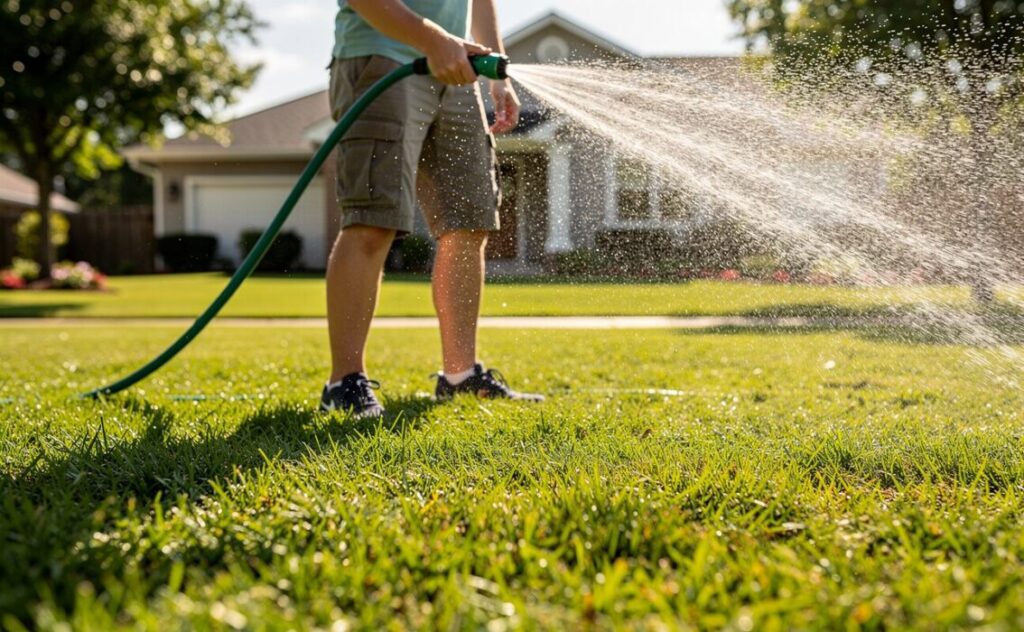
Right after fertilizing, you need to water deeply. The goal is to get the fertilizer and soil good and wet, but without puddles or a lot of runoff. That usually means enough water to moisten the soil 3-4 inches down. Not enough water leaves fertilizer sitting on top, which can cause burns. Too much can wash away nutrients – this pollutes the environment. How long you water depends on a few things: your sprinklers, soil type, and the weather.
What Is the Recommended Watering Duration and Quantity?
Water most granular fertilizers for 15 to 30 minutes with sprinklers. This puts down about a quarter-inch of water, soaking the soil a few inches deep. This amount washes fertilizer off grass blades. It also activates all granular and slow-release products. The type of sprinkler and your water pressure will change the exact timing.
How to Ensure Even Coverage and Prevent Runoff?
Move hoses and sprinklers around the lawn to get everything wet. This makes sure all areas get covered and stops water from running off. Don’t water too much; you’ll just make puddles or cause runoff. Runoff moves fertilizer around – that means uneven feeding for your plants. It can also leave rust stains if the fertilizer has iron in it. Just moisten the soil. Keep runoff minimal so the nutrients stay put for the roots to soak up.
How to Measure Post-Fertilizing Water Application?
You need a rain gauge or catch-can method to measure water after fertilizing. This guarantees exactly 1/4 inch of water gets applied. Proper watering helps plants take in nutrients better and stops them from burning. Smart irrigation systems also adjust based on live data.
What Is Your Watering Schedule After the Initial Fertilization?
Once you water to start the fertilizer, don’t water your lawn again for two days. This break lets the nutrients sink into the soil. After that, go back to how you usually water – focus on deep, less frequent sessions. This helps roots grow deeper and stronger, building a tougher lawn. How much water you need changes based on your grass type, the weather, and your soil.
What Is Deep and Infrequent Watering for Long-Term Lawn Health?
After the two-day break, water your lawn deeply but rarely. This is key for long-term health. Water will soak several inches into the soil. This helps grass roots grow deeper – about 6 inches down. A lawn with deep roots stands up better to dry spells. It looks greener, too. You use water more effectively, and get healthier, stronger grass.
How Much Water Does a Lawn Need on a Weekly Basis?
Your lawn needs about 1 inch of water each week after a two-day break and once regular watering starts again. This includes any rain that falls, plus what you add. Water deeply but not often. You want to get the soil wet several inches down. This usually takes 45 to 60 minutes, though it depends on your sprinkler system and soil type. Use a rain gauge to track how much water your lawn gets in total each week.
How Do External Factors Affect Your Lawn’s Ongoing Watering Needs?
The last section talked about watering times, but outside factors really change how much water your lawn needs. Think about the weather – temperature, humidity, and wind all speed up evaporation. Your grass type plays a role, too. Cool-season grasses drink differently than warm-season types. And what about your soil? Sandy soil dries out fast and needs more water; clay holds moisture for a long time. Watch these things closely. It will keep your lawn healthy and stop it from drying out or getting too much water.