
- Can Grass Grow in Sand?
- Challenges of Growing Grass in Sandy Soil
- How Sand Type Influences Grass Cultivation
- Improving Sandy Soil Conditions for Grass
- Recommended Grass Types for Sandy Soil
- Establishing a New Lawn in Sandy Soil
- Optimal Watering Techniques for Sandy Lawns
- Maintaining a Healthy Lawn on Sandy Soil
- Similar posts:
Can Grass Grow in Sand?
Grass can grow in sand, but it’s tricky. Sand drains well – maybe too well – and often doesn’t hold enough nutrients or water for strong growth. Every type of grass needs water and some food to thrive. Roots will grow down until they hit pure sand, then they may stop.
Your success depends on a few things: the kind of sand, how much water is around, nutrient levels, salinity, and the grass species you pick. You can get a grassy cover if you add the right soil amendments and choose the right grass. Otherwise, pure sand usually only supports a few scattered pioneer plants. Knowing your soil and light conditions is key for a yard that really lasts.
Challenges of Growing Grass in Sandy Soil
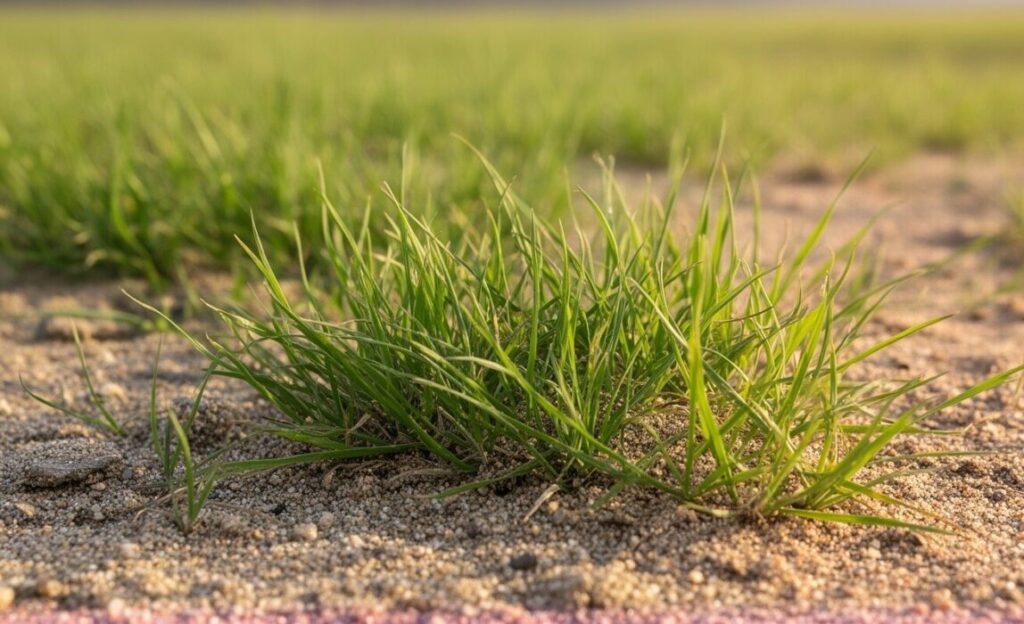
Growing grass in sandy soil is tough. The ground struggles to hold water and key nutrients; it dries out fast because it’s so porous. This makes sandy soil a poor choice for a green lawn.
While sand heats up quicker than clay in spring – a benefit for early growth – it also dries out much faster come summer. It loses nutrients easily then, too. The soil’s loose, coarse texture is simple to work, but it washes away and packs down if you don’t handle it right. Grass in this soil faces more stress.
Pests like mole crickets love its loose ground and tunnel right through it. Keeping a lawn healthy here means constant upkeep – regular watering and always adding nutrients.
How Sand Type Influences Grass Cultivation
The kind of sand used really affects how well grass grows. River sand usually has silt, clay, and organic matter mixed in. This lets it hold onto water and nutrients better. Sea sand, on the other hand, is rougher – it drains fast, keeping very little water or food for plants.
It also contains dissolved salts, which makes the soil too salty. This stops seeds from sprouting and stresses out most lawn grasses. In short, dry, open beach sand makes a bad home for turf grasses. Getting grass to grow well depends on the sand type, how much moisture it has, its nutrient content, salinity, and the specific grass variety picked.
Improving Sandy Soil Conditions for Grass
Making sandy soil better for grass means it will hold more water and nutrients. You need to add organic matter, like compost from food waste, cow manure, or peat moss. This organic stuff works like a sponge. It makes the soil better at holding onto water and nutrients.
For instance, pure food waste compost can raise the easily available water by 169%. It also ups total porosity by 6%. Natural clay mixed with wheat straw helps soil structure too. Regular aeration – going over the lawn to make little holes – cuts down on soil compaction. This further helps with water and nutrient retention. Use slow-release granular fertilizer because sandy soil lets nutrients drain quickly. Adding topsoil or extra compost helps new grass grow. It also means you water and fertilize less often.
Recommended Grass Types for Sandy Soil
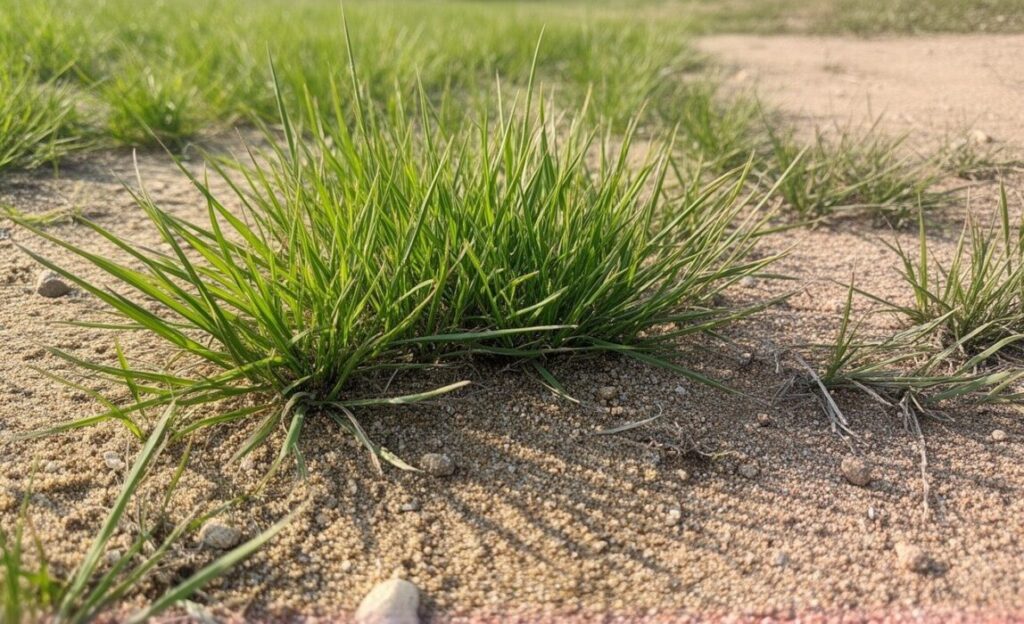
Sandy soil needs special grass types. These plants thrive thanks to deep roots and strong drought tolerance.
Warm-season grasses fit well in sandy ground:
- bahiagrass has widespread roots, requires little upkeep, and resists pests. It loves full sun,
- bermudagrass is versatile and stands up to dry spells. This grass takes heavy foot traffic and needs full sun,
- centipedegrass loves heat and asks for little care. It even pulls nutrients from poor sandy soil, even with its shallow roots,
- zoysiagrass, with its deep roots, fights off drought and heat. It handles foot traffic well.
Cool-season grasses also adapt to sandy conditions:
- tall Fescue grows in different soils and handles lower fertility. It prefers cool weather and some shade,
- bentgrass truly likes sandy soil that drains and breathes well – this stops root rot,
- fine Fescue includes like Chewings Fescue, which resists drought,
- sheep’s Fescue also makes it in infertile soils.
Establishing a New Lawn in Sandy Soil
Starting a new lawn in sandy soil takes real thought. You first need to change the soil itself, making it better at holding nutrients and clumping together. Time your seeding in the spring – early to late – or wait until fall, skipping the especially hot or cold days.
After you bury the seeds, cover them with straw, hay, or peat moss. This keeps them moist and adds organic stuff, which helps them sprout into grass. Laying sod gets you a lawn faster and stops erosion right away. If you have bare spots or thin patches, tall fescue works well.
Most grass seeds will sprout in about 14 days; this depends on the type of grass and the weather outside. Give those new shoots a starter fertilizer to help them really take off.
Optimal Watering Techniques for Sandy Lawns
Sandy lawns need careful watering. Their soil drains fast, so water deeply but not too often. This helps roots grow down deep. Don’t give them too much water, or too little.
Sprinklers or drip irrigation spread water evenly – vital for sandy ground. Wireless sensors can also pinpoint just how much water is needed. Adding mulch – use grass clippings or shredded leaves – keeps the soil moist. It also evens out soil temperature and adds organic material, making the soil healthier and more fertile.
Maintaining a Healthy Lawn on Sandy Soil
Keeping a lawn healthy in sandy soil takes steady, specific care. Sandy soil lacks nutrients, so regular feeding with slow-release products is key. Stick to the suggested amounts to avoid burning your lawn.
Cut grass based on its type, taking off only one-third of the blade. This helps it grow stronger, shades the ground, and keeps moisture from evaporating. Sandy soil can’t handle much foot traffic. That’s why deeper-rooting grasses – like tall fescue, bermudagrass, or bahiagrass – work best here. Watch for pests and manage diseases carefully; grass in sandy soil gets stressed easily. Good water control and adding compost are vital for lasting fertility and strong plants.